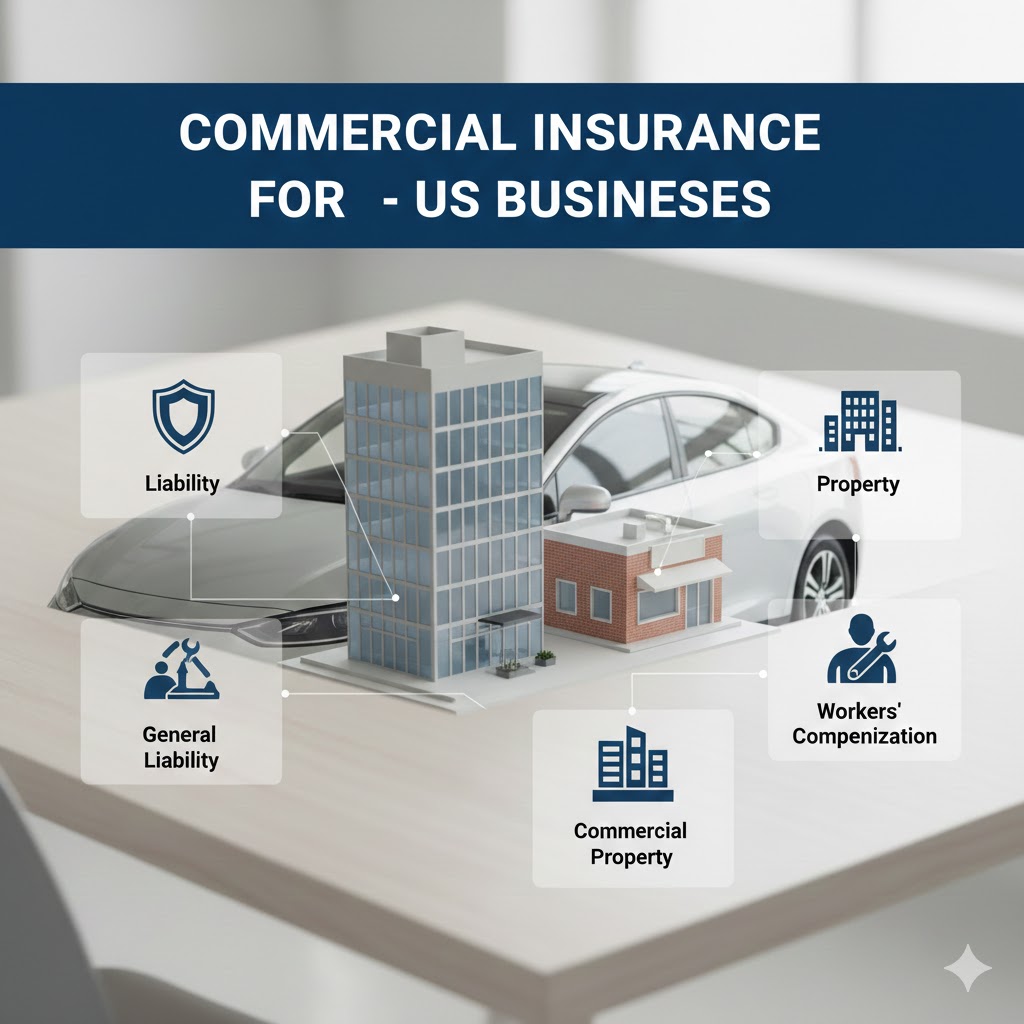
Every business operating in the United States faces risks that could result in significant financial losses — property damage, lawsuits, employee injuries, cyberattacks, and business interruptions. Commercial insurance is the comprehensive system of protections designed to keep your business financially stable when the unexpected happens.
Whether you’re a sole proprietor, a small business owner, or managing a growing mid-sized company, understanding commercial insurance is fundamental to running a resilient business.
What Is Commercial Insurance?
Commercial insurance is an umbrella term for all types of insurance coverage purchased by businesses to protect against financial risks related to their operations, employees, property, and legal liabilities. Unlike personal insurance, commercial policies are specifically designed to address the scale, complexity, and unique exposures of business activities.
Core Types of Commercial Insurance
General Liability Insurance
The cornerstone of commercial insurance. Protects your business from third-party claims of bodily injury, property damage, and personal injury arising from your business operations. Required by most commercial leases and client contracts.
Commercial Property Insurance
Covers your business’s physical assets — buildings, equipment, inventory, and furnishings — against fire, theft, vandalism, and certain weather events. Available in two forms: Basic Form (covers specific named perils) and Special Form (covers all perils except those specifically excluded).
Business Interruption Insurance
Also called business income insurance, this coverage replaces lost revenue and pays ongoing expenses if your business is forced to close temporarily due to a covered event like fire or storm damage. It’s one of the most underutilized but critically important commercial coverages.
Workers’ Compensation Insurance
Required by law in all US states except Texas for businesses with employees. Covers medical expenses and lost wages for employees injured on the job. Also protects employers from lawsuits by injured employees in most cases.
Professional Liability / Errors and Omissions
Essential for service-based businesses. Covers claims that your business’s professional services caused financial harm to a client due to negligence, errors, or omissions.
Cyber Liability Insurance
Covers your business against losses from data breaches, ransomware attacks, and other cyber incidents. Includes notification costs, credit monitoring for affected customers, legal fees, and business interruption from cyber events.
Directors and Officers Insurance
Protects the personal assets of company executives and board members against lawsuits alleging wrongful acts in their management roles. Essential for corporations and non-profits.
Industry-Specific Commercial Insurance
Many industries have specialized insurance needs beyond standard commercial policies. Contractors need contractor’s pollution liability and inland marine coverage for tools and equipment. Healthcare businesses need medical malpractice insurance. Restaurants need liquor liability and food contamination coverage. Technology companies need technology errors and omissions insurance.
Always work with a commercial insurance broker who understands your specific industry to ensure you have all the coverage your business needs.
The Business Owner’s Policy (BOP)
For eligible small and medium-sized businesses, a Business Owner’s Policy bundles general liability, commercial property, and business interruption coverage into a single, cost-effective package. BOPs are typically 10–25% cheaper than purchasing each coverage separately and simplify policy management with a single renewal date and insurer.
How Much Does Commercial Insurance Cost?
| Coverage Type | Average Annual Cost |
| General Liability ($1M) | $400 – $1,500 |
| Commercial Property | $500 – $3,000 |
| Business Owner’s Policy | $500 – $3,500 |
| Workers’ Compensation | $800 – $3,000/employee |
| Cyber Liability | $500 – $5,000 |
| Professional Liability | $500 – $3,000 |
Choosing the Right Commercial Insurance
Start with a risk assessment — identify the biggest threats to your business operations and assets. Work with an independent commercial insurance broker who can analyze your needs across multiple carriers rather than being limited to one company’s products. Review your policies annually and update coverage when your business grows, hires new employees, or expands into new areas.
Final Thoughts
Commercial insurance is not a one-size-fits-all purchase. The right combination of coverages depends on your industry, size, assets, and specific risks. Investing time in understanding your options and working with an experienced commercial broker will ensure your business is properly protected — allowing you to focus on growth with confidence.